
Context
In Cameroon, more than 250 ethnic groups share a vast heritage: weddings, chiefdoms, cuisine, oral traditions. But this knowledge is passed on mainly orally, and is lost from one generation to the next. Online, it is scattered across social networks and a few hard-to-read blogs.
Back 2 Culture was born of a simple idea: a single, serious and enjoyable-to-read place where you can explore Cameroonian culture by theme, people or region.
My approach
I started in July 2023 with brainstorming workshops on FigJam to define the editorial line, sections and audiences. Then hand sketches and a moodboard (earth tones, deep green, field photos) before moving on to the Figma mock-ups.
Two principles guided the design:
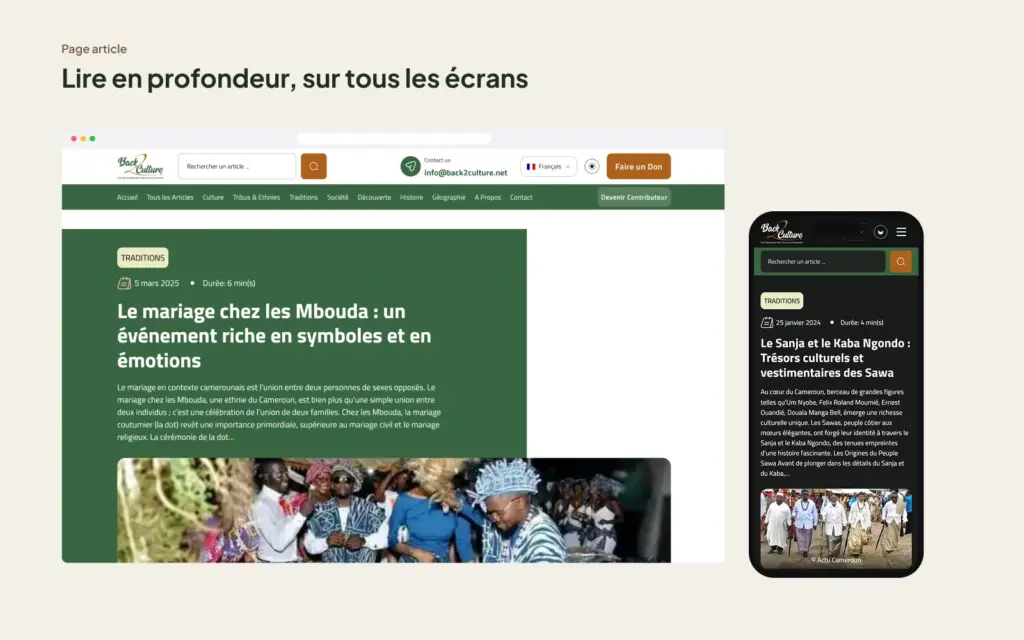
- Content first: comfortable typography, clean article pages, categories visible everywhere.
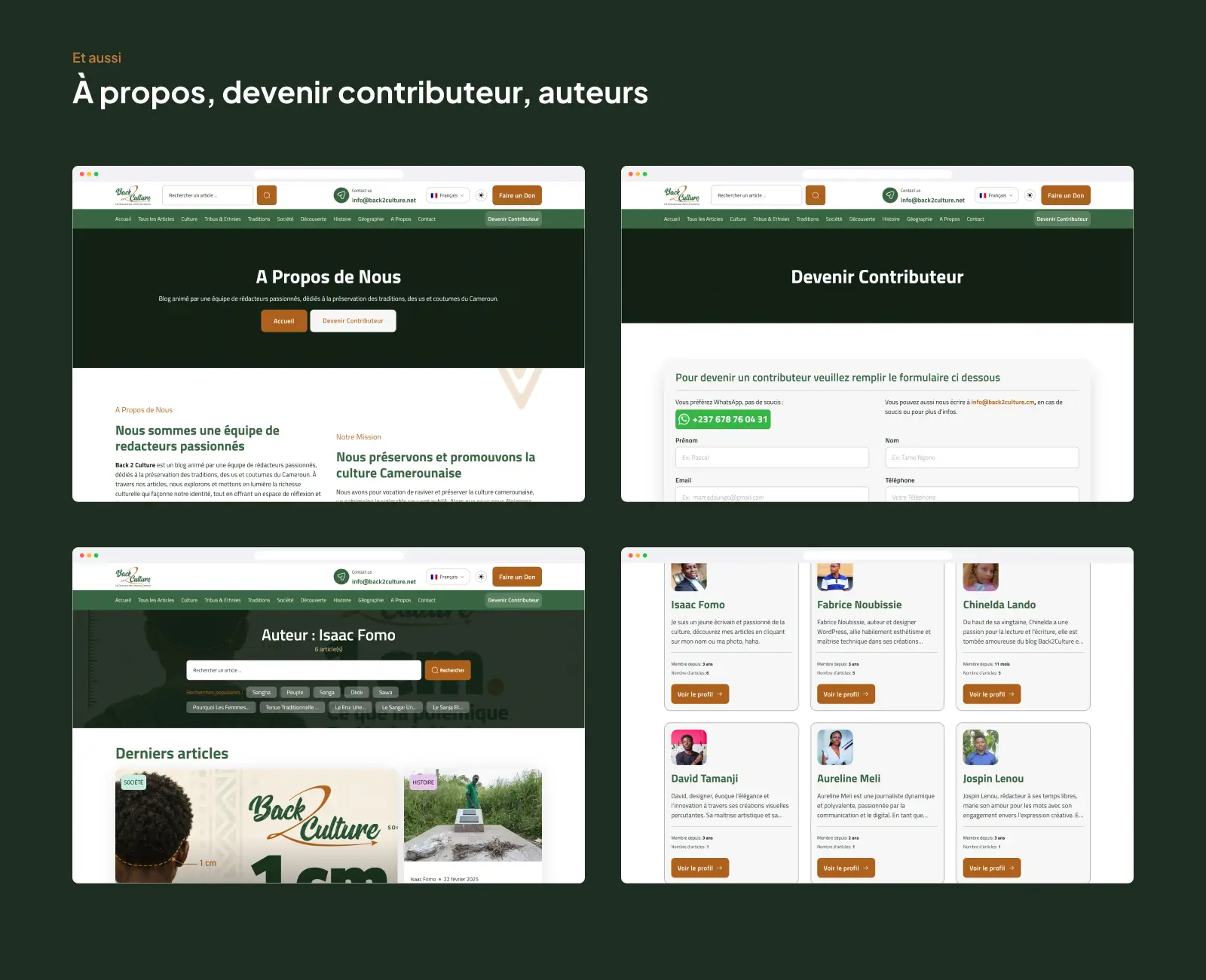
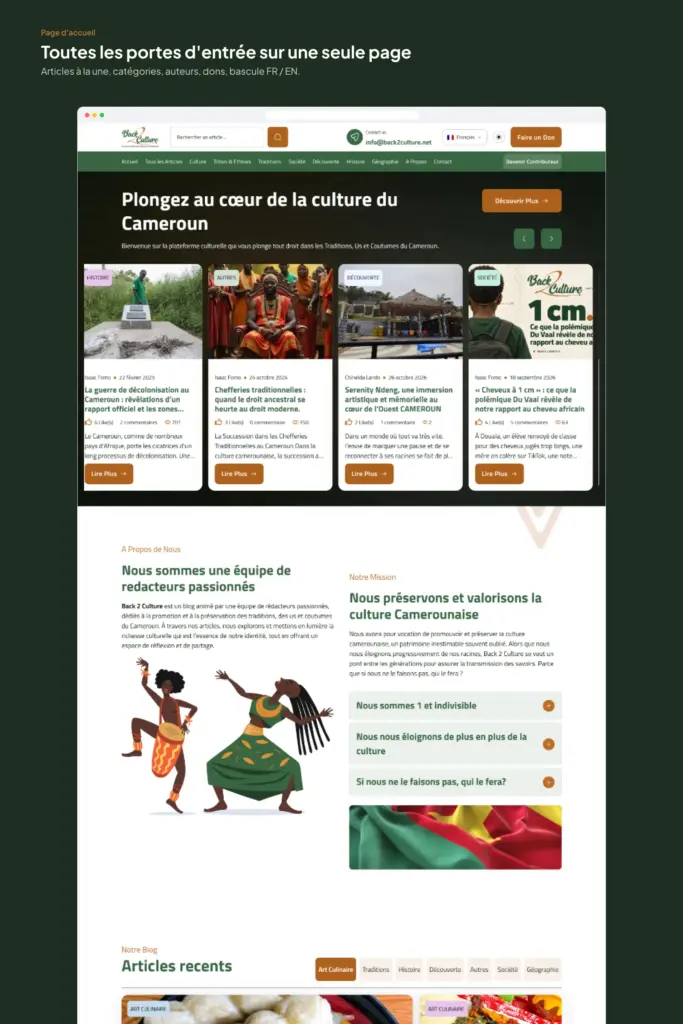
- Community front and centre: each article displays its author, likes, comments and views; each author has their page.
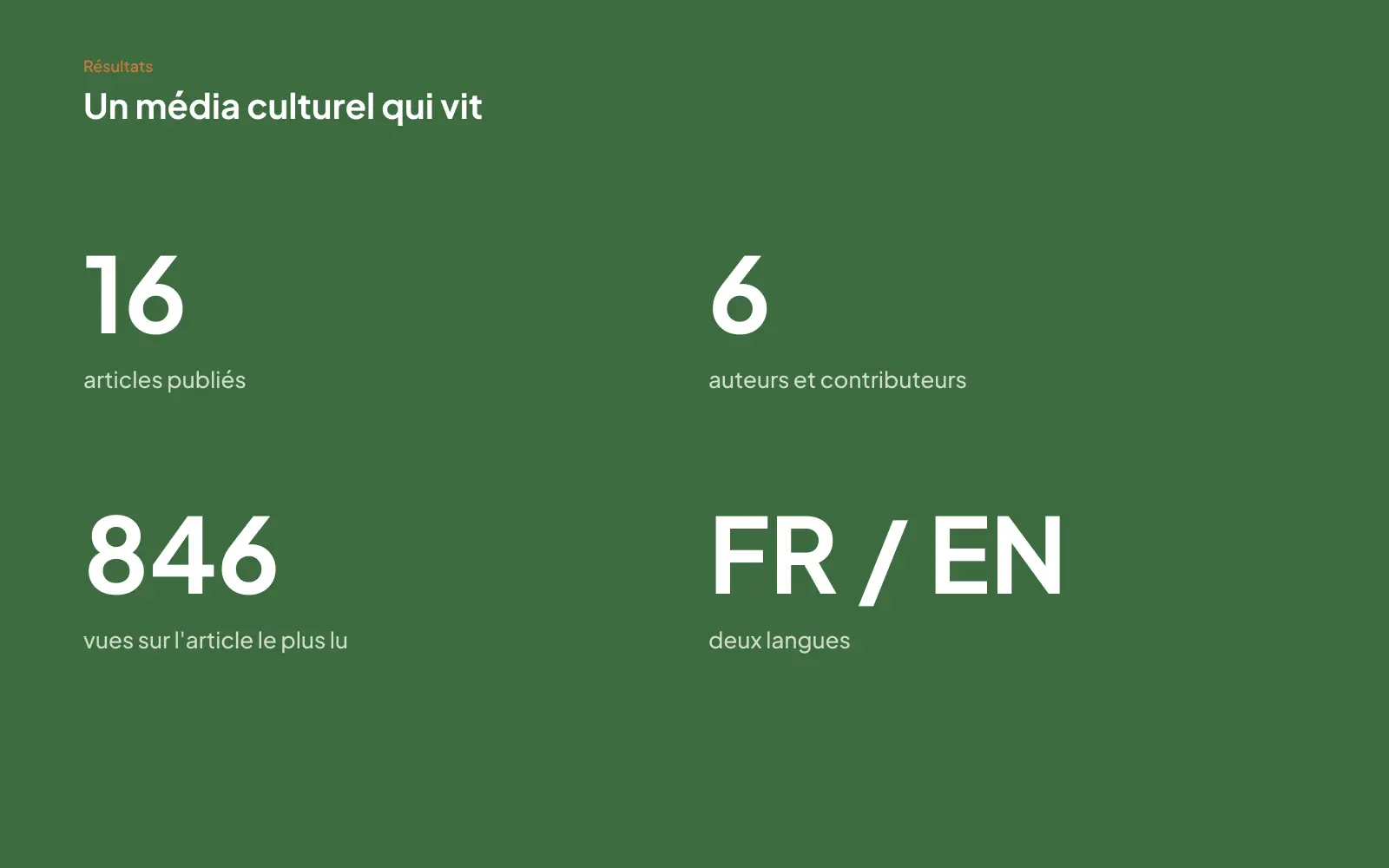
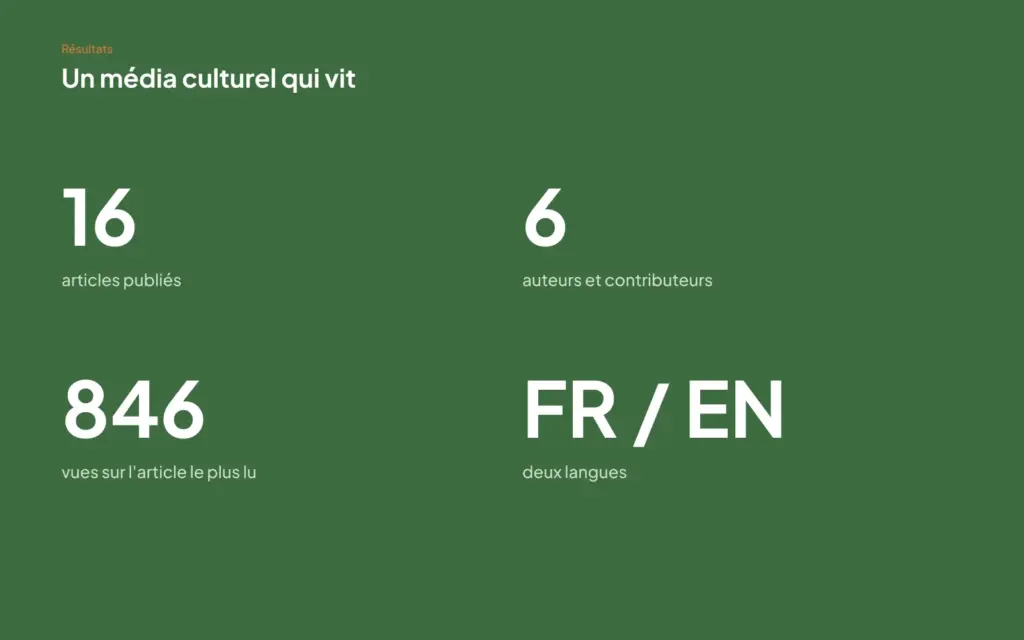
In figures
Deliverables
Content strategy, UX/UI, design system, WordPress site, copywriting
Tools
Challenge
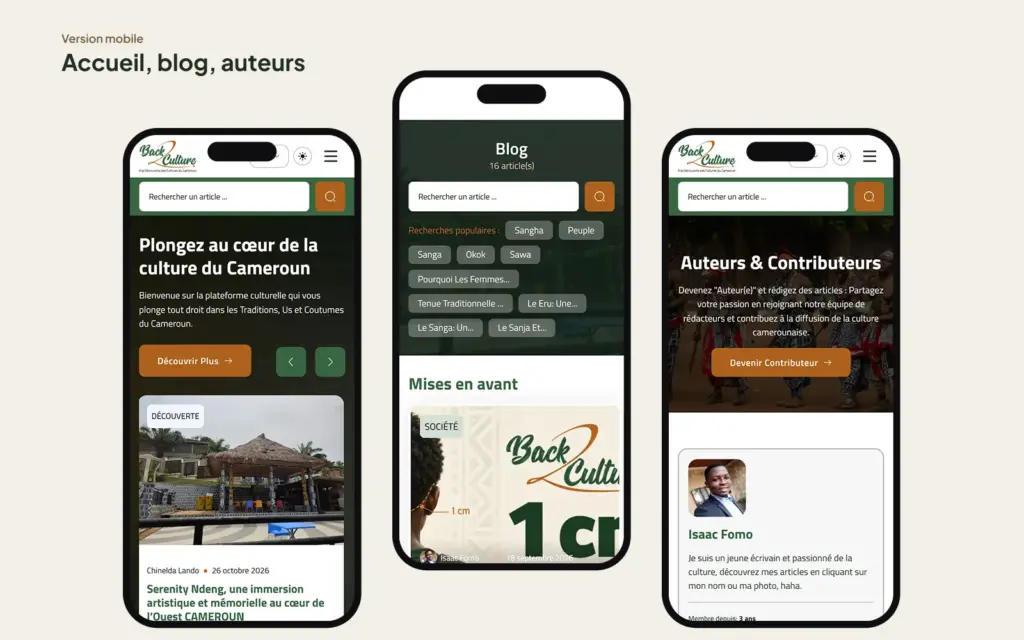
- Make sometimes long and specialist topics enjoyable to read, including on mobile.
- Organise very varied content (history, cuisine, traditions, society) without losing the reader.
- Bring a media outlet to life with several volunteer authors, and make others want to contribute.
- Reach the diaspora and an international audience: bilingual FR / EN site.
Solution
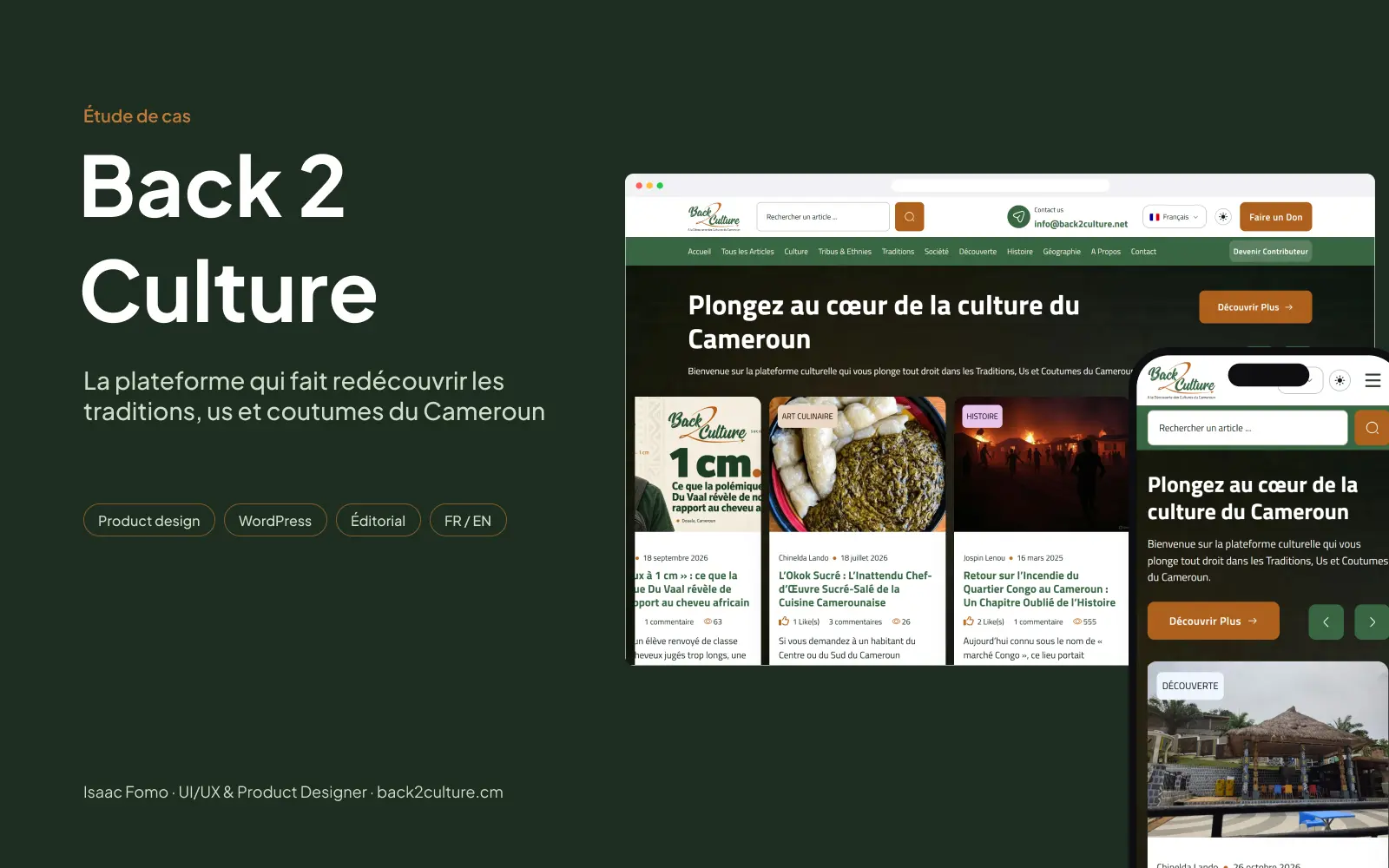
- A homepage that opens every door: featured articles, categories, authors, donations call.
- 8 sections: Tribes & ethnic groups, Traditions, Society, Culture, History, Geography, Discovery, Culinary arts.
- An article page designed for long-form reading, with reading time and interactions.
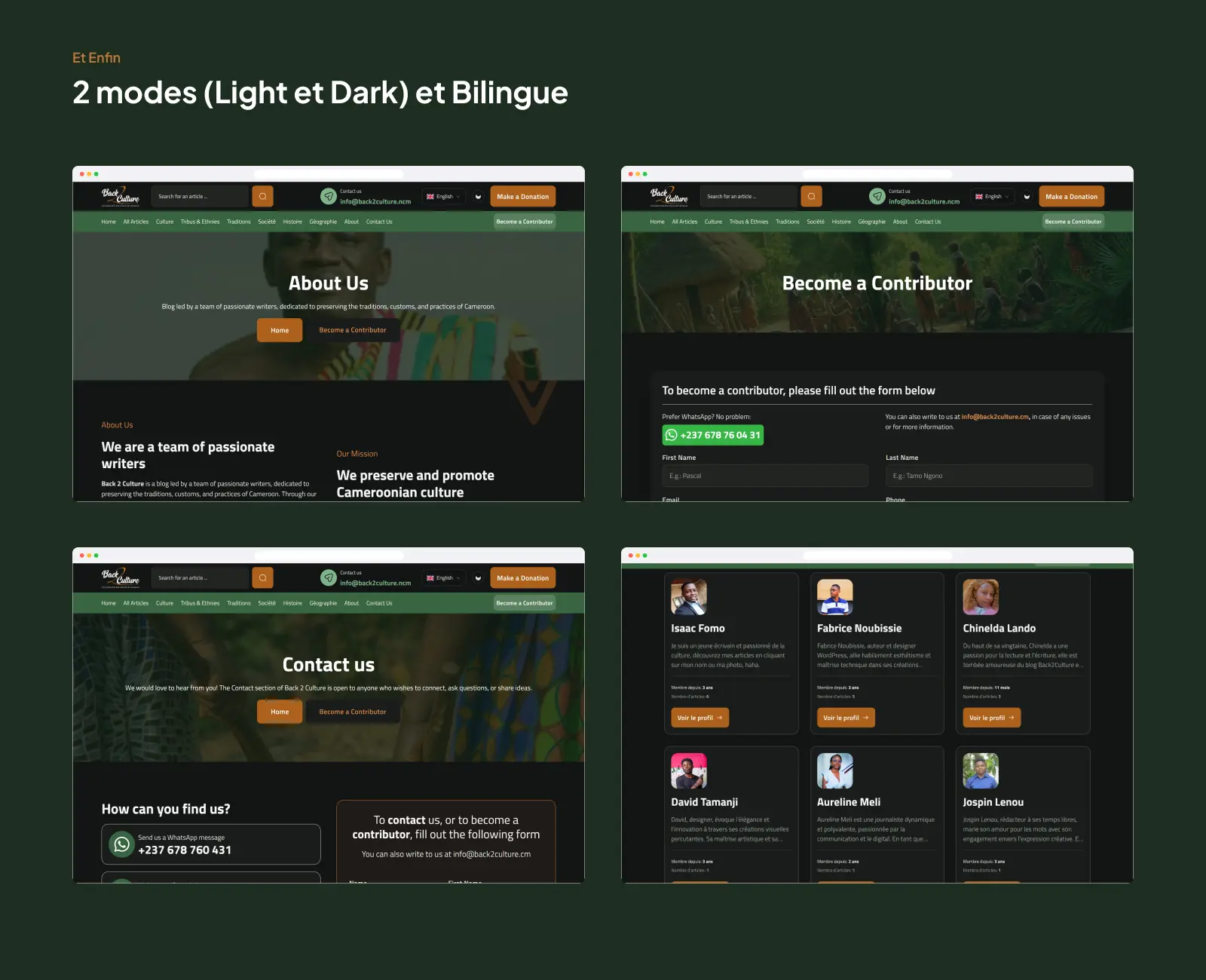
- A "Become a contributor" programme with form and WhatsApp contact.
- Search with popular suggestions (Sangha, Okok, Sawa…).
- A fully bilingual site and dark mode.
Key screens
What I take away from it
Taking a project from A to Z taught me to think beyond the screen: the editorial line, contributor motivation and hosting matter as much as the interface. It's also the project where I iterated the most after launch, by observing what readers actually read.